Fisetin is a yellow plant pigment belonging to the flavonol subclass of polyphenols. It is found in a variety of common fruits and vegetables, with strawberries consistently identified as the richest dietary source. Interest in fisetin has grown in recent years because laboratory and early clinical research has examined its potential as a senolytic agent—a compound that may selectively encourage the clearance of senescent, or dysfunctional, cells that accumulate with age.
Understanding where fisetin comes from in the diet, how much is realistically present, and why researchers and supplement makers use concentrated doses requires looking at both the food science and the biology. This article covers the natural food sources of fisetin, typical dietary amounts, the gap between diet and research protocols, and the honest limits of current evidence.
Key Takeaways
- Strawberries are the richest known dietary source of fisetin, containing roughly 160 micrograms per gram of fresh fruit.
- Other sources include apples, persimmons, grapes, onions, and cucumbers, all at much lower concentrations than strawberries.
- Bioavailability from food is limited by poor water solubility and rapid metabolism in the gut and liver.
- Research senolytic protocols use doses (often 20 mg/kg/day intermittently) that cannot be approached through ordinary food intake, which is why concentrated supplements exist.
- Fisetin supplements are not FDA-approved to treat any condition, and high-dose safety in humans has not been established through large trials.
What Is Fisetin and Why Does It Matter?
Fisetin (3,3′,4′,7-tetrahydroxyflavone) is a naturally occurring flavonoid that acts as a pigment in plants. Like other dietary polyphenols—quercetin, kaempferol, luteolin—it belongs to a large family of plant compounds that interact with multiple cellular pathways in the body. What distinguishes fisetin from most polyphenols in current research is its proposed activity as a senolytic: a compound studied for its ability to induce apoptosis (programmed cell death) specifically in senescent cells, which are cells that have stopped dividing but resist dying and can drive inflammation over time.
Preclinical studies in mouse models have shown fisetin to extend median lifespan and improve measures of health in aged animals, which has generated significant scientific interest. However, translating these findings to humans is still in early stages, and no regulatory agency has approved fisetin to treat, cure, or prevent any disease. It is sold as a dietary supplement, not a drug.
Foods That Naturally Contain Fisetin
Fisetin is not uniformly distributed across the plant kingdom. It is concentrated in relatively few foods, and even within those foods the amounts vary depending on variety, ripeness, growing conditions, and storage. The following are the best-characterized natural sources:
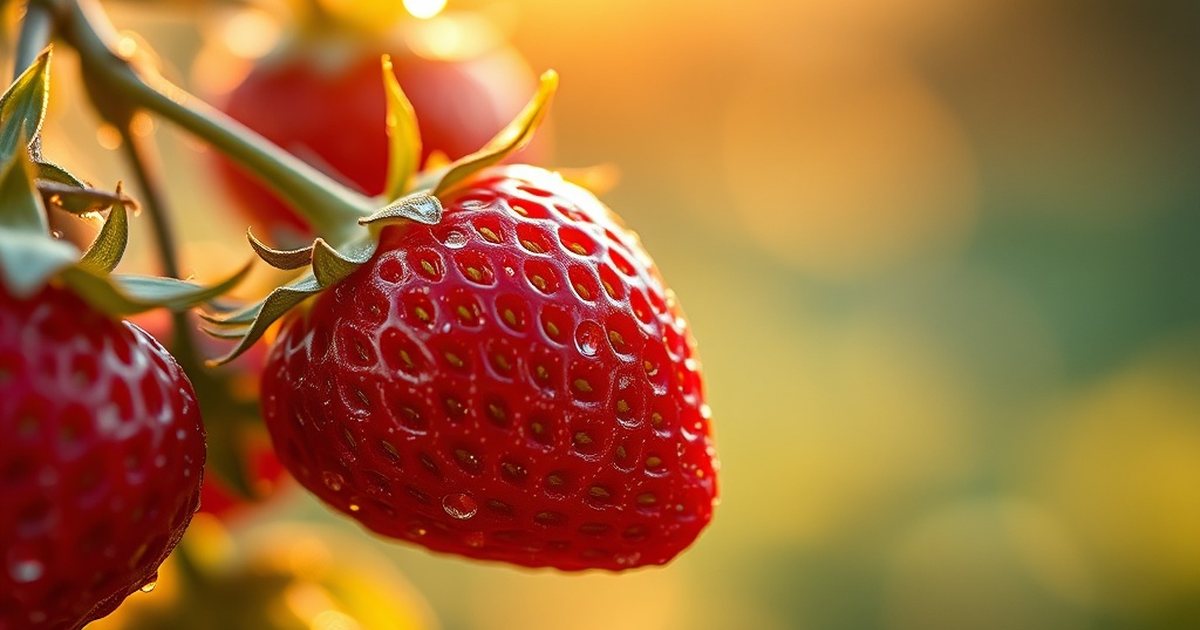
Strawberries are the standout dietary source, containing roughly 160 micrograms of fisetin per gram of fresh fruit—far more than any other commonly eaten food. A typical serving of strawberries (around 150 grams) therefore provides in the range of 20–24 milligrams of fisetin, though this figure varies meaningfully by cultivar and season. Apples, particularly the skin, contain modest amounts, generally estimated between 2 and 10 micrograms per gram depending on variety. Persimmons have been identified as another relatively concentrated source. Grapes, kiwis, and peaches contain smaller amounts. Among vegetables, onions and cucumbers have been documented to contain fisetin, though again at levels well below strawberries. Lotus root has also been noted in some analyses.
It is worth being transparent about the precision here: published food composition databases for fisetin are less comprehensive than those for better-studied polyphenols like quercetin. Different analytical methods and food preparation steps (cooking, juicing, drying) affect measured values, so the numbers above should be treated as approximate ranges rather than exact figures.

How Bioavailability Affects What You Actually Absorb
Eating a food that contains fisetin does not mean that the same amount reaches the bloodstream or tissues. Bioavailability—the fraction of an ingested compound that enters circulation and is available to exert biological effects—is a critical and often overlooked factor with dietary polyphenols.
Fisetin faces several bioavailability challenges. Like many flavonoids, it is poorly soluble in water, which limits absorption in the gut. It is also subject to rapid metabolism: intestinal and liver enzymes modify fisetin quickly, and gut microbiota further transform it, meaning that the compounds circulating in blood after eating strawberries are a mix of fisetin and its metabolites rather than fisetin alone. Whether these metabolites retain the same biological activities as fisetin itself is an area of ongoing research.
These limitations mean that even regular strawberry consumption, while nutritionally valuable for many reasons, delivers fisetin in a very different pharmacokinetic profile than the concentrated, intermittent dosing strategies explored in clinical senolytic research. Food-derived fisetin contributes to overall polyphenol intake but should not be assumed to replicate the conditions of research protocols.
The Gap Between Diet and Research Protocols
Early human trials studying fisetin as a senolytic have used doses in the range of 20 milligrams per kilogram of body weight per day, administered intermittently over short periods (for example, two consecutive days per month). For a person weighing 70 kilograms, this translates to roughly 1,400 milligrams per day during a dosing cycle.
To reach even 1,000 milligrams of fisetin from strawberries alone, you would need to eat approximately 6 to 7 kilograms of fresh strawberries in a single day—a quantity that is neither practical nor sensible. This arithmetic explains directly why dietary intake and supplemental senolytic protocols exist in fundamentally different categories. The amounts used in food are part of a normal varied diet; the amounts being studied in clinical trials are pharmacological in scale and intent.
This gap does not mean dietary fisetin is without value—polyphenol-rich diets are consistently associated with positive health markers in population research—but it does mean that eating strawberries cannot be treated as an equivalent to supplemental fisetin when discussing the specific senolytic research context.
Why Supplements Exist: Filling the Dose Gap
Concentrated fisetin supplements exist primarily because the food matrix cannot practically deliver the doses being investigated in research settings. Supplement manufacturers typically offer fisetin derived from the Cotinus coggygria plant (smoke tree or young fustic), which is a commercially viable botanical source of the compound, rather than extracting it from strawberries at scale.

Supplement forms vary. Some products contain fisetin alone; others combine it with quercetin, another flavonoid with overlapping studied mechanisms, or with formulation aids intended to improve absorption—such as phospholipid complexes or piperine from black pepper. Whether these formulation strategies meaningfully improve the delivery of fisetin in humans is an area where the evidence base remains limited.
The existence of a supplement is not itself evidence that taking it produces the outcomes seen in preclinical research. Consumers should be aware that the supplement market for fisetin has expanded faster than the clinical evidence base, and that many products make implicit or explicit longevity claims that go beyond what current human data supports.
Practical Context: Diet, Supplements, and What the Evidence Actually Supports
For most people, the practical question is whether to seek fisetin from food, supplements, or both. From a dietary standpoint, regularly eating strawberries and other fisetin-containing fruits and vegetables is a sensible part of a health-supportive diet, independent of any senolytic theory. These foods provide fiber, vitamins, other polyphenols, and minerals that have well-established roles in health.
The decision to take concentrated fisetin supplements is a different question—one that sits closer to a decision about experimental protocols than to ordinary nutrition. The high intermittent doses studied in early human trials have not been established as safe or effective through large-scale randomized controlled trials. Fisetin can inhibit certain cytochrome P450 enzymes involved in drug metabolism, most potently CYP2C9, CYP2C19 and CYP1A2, and may interact with anticoagulants and other medications. People taking prescription drugs, particularly blood thinners, should speak with a physician before adding a concentrated fisetin supplement.
Current evidence supports cautious interest rather than confident conclusions. The preclinical data are genuinely intriguing, and early human trials have begun, but the field is young. Staying informed through peer-reviewed sources and avoiding overclaiming products is the most defensible approach.
🛒 Where to Buy Fisetin
- Life Extension Bio-FisetinLab-tested / studied
capsules, 24 mg per capsule (enhanced-bioavailability liposomal blend) — One of the category’s flagship products; liposomal delivery is designed to improve oral absorption; the lower per-capsule dose requires stacking multiple capsules for research-level senolytic protocols - NOW Foods Fisetin
capsules, 100 mg per capsule — NSF-certified GMP facility; widely available at retail and online; reliable entry-level option for low-dose daily regimens - Double Wood Supplements Fisetin
capsules, 100 mg per capsule (60 count) — USA-manufactured and third-party tested; consistently strong Amazon ratings; popular choice in r/longevity for cost-effective daily use - Swanson Fisetin
capsules, 100 mg per capsule — Established supplement brand with broad distribution; budget-friendly for users wanting a recognizable name at a low cost per dose
As an Amazon Associate we earn from qualifying purchases. Fisetin quality varies mainly in purity. Choose a product that states its standardization percentage (commonly 98%) and backs it with HPLC-based third-party testing, since a label that only says fisetin extract gives you no way to verify potency.

A Note on the Evidence
The senolytic doses of fisetin studied in early clinical research have not been established as safe or effective in large-scale human trials, and fisetin is not approved to treat, cure, or prevent any disease. Individuals taking blood thinners, CYP2C9- or CYP3A4-sensitive medications, or managing chronic health conditions should consult a qualified physician before using concentrated fisetin supplements. This article is informational only and does not constitute medical advice.
Frequently Asked Questions
Which food has the most fisetin?
Strawberries are consistently identified as the highest dietary source of fisetin, estimated at roughly 160 micrograms per gram of fresh fruit. A standard serving provides around 20 milligrams, though this varies by variety and growing conditions.
Can I get enough fisetin from diet alone to match supplement doses?
No, not practically. Research senolytic protocols use doses of approximately 20 mg per kilogram of body weight, which for an average adult exceeds 1,000 mg per day during dosing cycles. Reaching that from strawberries would require eating many kilograms of fruit daily, which is neither realistic nor advisable.
Does cooking affect fisetin content in foods?
Heat, oxidation, and prolonged storage can degrade polyphenols including fisetin. Eating fruits raw and fresh generally preserves more of their polyphenol content than cooking or long-term refrigeration, though precise data on fisetin degradation rates under different cooking conditions is limited.
Where do fisetin supplements come from if not strawberries?
Most commercial fisetin supplements are derived from Cotinus coggygria, a plant commonly called the smoke tree or young fustic, which contains high concentrations of fisetin and is more economically practical as a botanical source than processing large volumes of strawberries.
Who should be cautious about taking fisetin supplements?
People on blood thinners, those taking medications metabolized by cytochrome P450 enzymes such as CYP2C9, CYP1A2 and CYP3A4, pregnant or breastfeeding individuals, and anyone with a chronic health condition should consult a physician before using concentrated fisetin supplements. High-dose safety has not been established through large human trials.
Is dietary fisetin from food still worth consuming even if the doses are low?
Yes. Eating fisetin-containing foods like strawberries, apples, and onions contributes to overall polyphenol intake and is part of a broadly health-supportive dietary pattern. The value of these foods does not depend on achieving senolytic-scale doses—they offer fiber, vitamins, and other beneficial compounds independent of fisetin specifically.
These statements have not been evaluated by the Food and Drug Administration. This information is not intended to diagnose, treat, cure, or prevent any disease. Content is for informational purposes only and is not medical advice; consult a qualified healthcare provider before starting any supplement. As an Amazon Associate we earn from qualifying purchases.
