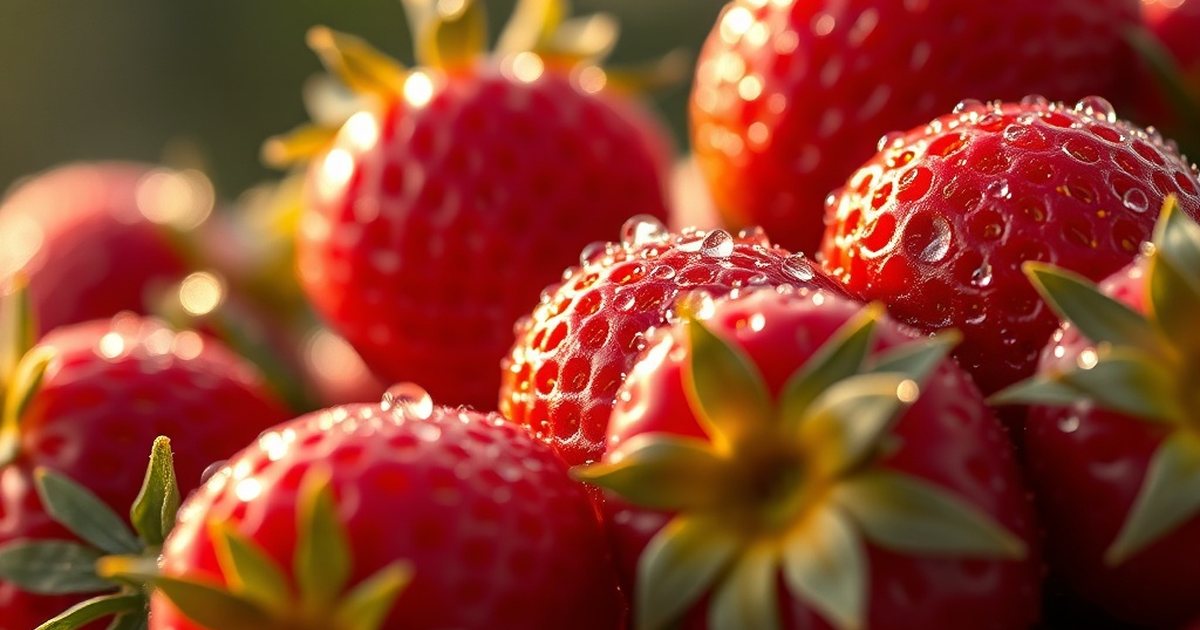
Fisetin is a naturally occurring flavonoid found in modest amounts in everyday foods like strawberries, apples, onions, and cucumbers. Over the past decade it has attracted serious scientific attention for one specific reason: early research suggests it may function as a senolytic—a compound capable of selectively clearing senescent, or so-called ‘zombie,’ cells that accumulate in tissues as we age.
Unlike many supplement ingredients that cycle through popularity without a clear biological story, fisetin has a proposed mechanism that researchers can study directly. That said, most of the evidence to date comes from cell cultures and animal models, with human data still in early stages. This article walks through what fisetin is, what the science actually shows, and what remains genuinely unknown.
Key Takeaways
- Fisetin is a flavonoid concentrated in strawberries and studied primarily for its potential to selectively clear senescent cells through apoptotic pathways.
- Animal studies have shown lifespan and healthspan effects, but rodent findings do not automatically translate to humans.
- Proposed mechanisms include inhibition of PI3K/Akt signaling, activation of apoptotic programs, and modulation of mTOR—all studied in cell and animal models.
- Human clinical trials are underway but remain small and early-stage; no safe or effective human dose for senolytic use has been established.
- Poor bioavailability means supplement doses used in research are far higher than typical dietary intake from strawberries or other foods.
Fisetin: A Flavonoid Found in Everyday Foods
Fisetin (3,3′,4′,7-tetrahydroxyflavone) belongs to the flavonol subclass of polyphenols. Chemically, it shares the two-ring flavone backbone common to many plant pigments but carries a specific hydroxyl arrangement that shapes both its solubility and its biological activity. Strawberries contain the highest reported concentration of fisetin among commonly eaten foods, though the absolute amounts per serving remain small compared to the doses used in supplement research.
As a dietary phytochemical, fisetin shares territory with better-known compounds such as quercetin and resveratrol. Dietary phytochemicals as a class have attracted attention for their potential to modulate longevity-linked pathways—including nutrient-sensing cascades like mTOR and AMPK—though the extent to which usual dietary intake translates into measurable health effects in humans remains an open question [1].
What Does 'Senolytic' Actually Mean?
A senolytic compound is one that selectively promotes the death (apoptosis) of senescent cells while leaving healthy cells largely intact. Cellular senescence is a state in which cells stop dividing but do not die; instead they persist and release a cocktail of inflammatory signals called the senescence-associated secretory phenotype (SASP). Over time, accumulation of senescent cells is thought to contribute to tissue dysfunction, chronic inflammation, and a range of age-related conditions.
Fisetin has been studied in this context because it appears to engage apoptotic pathways in senescent cells more strongly than in healthy counterparts. The selectivity is not absolute, and the precise molecular triggers are still being mapped, but early preclinical findings have been striking enough to move the field toward early-phase human trials examining whether clearing senescent cells can improve measurable health outcomes.
Anti-aging research across model organisms—from the roundworm C. elegans and fruit fly Drosophila to rodents—has documented longevity-extending or healthspan-improving effects of various polyphenols including fisetin [2]. These observations across species have been a primary driver of interest in translating findings to human biology.


What Animal Studies Have Shown
Much of the excitement around fisetin traces back to preclinical work in aged mice where intermittent, relatively high-dose administration reduced tissue senescent cell burden and extended median lifespan compared to controls. These findings positioned fisetin among the more discussed senolytic candidates, though rodent physiology differs from human physiology in important ways—particularly in how quickly mice age and how efficiently they metabolize polyphenols.
Across model organisms more broadly, dietary phytochemicals have repeatedly demonstrated the ability to modulate longevity-associated pathways—including insulin/IGF-1 signaling, mTOR, sirtuins, and oxidative-stress responses—in ways that extend healthy lifespan under laboratory conditions [2]. Fisetin’s effects in these systems are consistent with that wider pattern, but consistency across model organisms does not guarantee the same magnitude of effect in long-lived humans eating varied diets.
Proposed Molecular Mechanisms
Fisetin’s biological effects appear to involve several overlapping pathways. One well-studied target is the PI3K/Akt signaling axis—a central hub for cell survival, growth, and metabolism. Polyphenols including fisetin have been shown to inhibit Akt phosphorylation in endothelial cells, which may lower the resistance of senescent cells to apoptosis and influence broader vascular biology [3]. Suppressing this pro-survival signal in senescent cells is one proposed explanation for the selective clearing effect observed in preclinical models.
Research has also examined whether fisetin and related natural products activate apoptotic programs in cancer cell lines, characterizing its interaction with cell-death pathways at a mechanistic level [4]. This line of work is distinct from the anti-aging context but helps researchers understand how fisetin engages apoptosis—which is directly relevant to the senolytic hypothesis.
Regulation of the mTOR nutrient-sensing pathway is another proposed mechanism by which dietary phytochemicals including fisetin may extend healthspan; mTOR inhibition is one of the most reproducible longevity interventions across model species [1]. Whether oral fisetin supplementation achieves sufficient systemic concentrations to meaningfully modulate mTOR activity in human tissues has not yet been established.
Where Human Evidence Currently Stands
Human clinical data on fisetin are early and limited. A small number of pilot trials have examined high intermittent doses—sometimes in the range of 20 mg per kilogram of body weight over two consecutive days repeated periodically—in older adults with frailty or in patients with COVID-19. These trials have primarily assessed safety, tolerability, and surrogate biomarkers rather than hard clinical endpoints like hospitalization or survival.
Results so far have been cautiously encouraging in terms of tolerability, but sample sizes have been small, follow-up periods short, and trials generally not powered to detect clinical benefit. The gap between robust animal findings and confirmed human benefit is common in longevity research, and fisetin has not yet produced the larger randomized evidence needed to make strong therapeutic claims.

Anti-aging effects of dietary phytochemicals have been documented from simple model organisms up through early-phase human studies [2], and fisetin sits in a pipeline of senolytic candidates where preclinical biology is relatively well-characterized but human validation is ongoing. Fisetin is not FDA-approved to treat, cure, or prevent any disease.
Bioavailability: A Practical Obstacle
One underappreciated challenge with fisetin is bioavailability. Like most polyphenols, fisetin is poorly soluble in water, rapidly metabolized in the gut and liver, and subject to extensive first-pass processing. This means that even substantial oral doses may yield relatively low and variable circulating concentrations. Some research formulations have explored lipid-based delivery systems to improve absorption, but these are not standard in most commercially available supplements.
The doses used in human senolytic protocols are substantially higher than what any normal diet provides. Achieving the concentrations used in mouse studies through food alone would require an impractical quantity of strawberries, which is why concentrated supplements are used in research—and why caution about extrapolating from fruit intake to supplement effects is warranted.
🛒 Where to Buy Fisetin
- Life Extension Bio-FisetinLab-tested / studied
capsules, 24 mg per capsule (enhanced-bioavailability liposomal blend) — One of the category’s flagship products; liposomal delivery is designed to improve oral absorption; the lower per-capsule dose requires stacking multiple capsules for research-level senolytic protocols - NOW Foods Fisetin
capsules, 100 mg per capsule — NSF-certified GMP facility; widely available at retail and online; reliable entry-level option for low-dose daily regimens - Double Wood Supplements Fisetin
capsules, 100 mg per capsule (60 count) — USA-manufactured and third-party tested; consistently strong Amazon ratings; popular choice in r/longevity for cost-effective daily use - Swanson Fisetin
capsules, 100 mg per capsule — Established supplement brand with broad distribution; budget-friendly for users wanting a recognizable name at a low cost per dose
As an Amazon Associate we earn from qualifying purchases. Fisetin quality varies mainly in purity. Choose a product that states its standardization percentage (commonly 98%) and backs it with HPLC-based third-party testing, since a label that only says fisetin extract gives you no way to verify potency.
A Note on the Evidence
The evidence base for fisetin as a senolytic agent remains largely preclinical; human trials are small, early-stage, and not yet sufficient to establish a safe or effective dose. People taking blood thinners, CYP2C9- or CYP3A4-sensitive medications, or those with chronic health conditions should consult a physician before using high-dose fisetin supplements. This article is informational only and does not constitute medical advice.

Frequently Asked Questions
What foods contain the most fisetin?
Strawberries contain the highest reported concentrations of fisetin among commonly eaten foods. Other sources include apples, persimmons, onions, and cucumbers. Dietary phytochemicals like fisetin are broadly present in plant-rich diets, which have been linked to longevity-relevant metabolic benefits [1], though typical food-derived intake is far lower than the doses used in supplement research.
How does fisetin work as a senolytic?
Senescent cells resist normal programmed cell death through pro-survival signaling pathways. Fisetin is thought to interfere with these signals—including the PI3K/Akt axis, where polyphenols have been shown to reduce Akt phosphorylation in cell studies [3]—making senescent cells more susceptible to apoptosis while leaving healthier cells relatively unaffected. This selectivity is partial and context-dependent, not an absolute on/off switch.
Has fisetin been proven to extend human lifespan?
No. Lifespan extension has been observed in rodent models, and anti-aging effects of polyphenols have been studied across organisms from C. elegans through to early human trials [2]. Human studies to date are small and focused on safety and surrogate biomarkers, not lifespan. No dietary supplement has been proven to extend human lifespan.

What doses are used in human research?
Human senolytic pilot studies have typically used high intermittent doses—sometimes around 20 mg per kilogram of body weight—taken over one or two consecutive days and repeated on a periodic schedule. These doses are far above what any diet provides and have not been confirmed as safe or effective in larger, longer trials. Anyone considering high-dose fisetin supplementation should discuss it with a physician first.
Are there drug interactions or safety concerns with fisetin?
Fisetin inhibits certain cytochrome P450 enzymes — most potently CYP2C9, CYP2C19 and CYP1A2, which can alter how other medications are processed in the body. It may also have mild antiplatelet properties, making it a particular concern for people on blood thinners such as warfarin. Long-term safety of high-dose fisetin supplements has not been evaluated in large human populations, and effects in vulnerable groups remain poorly characterized.
How does fisetin compare to quercetin?
Both fisetin and quercetin are flavonols with overlapping polyphenol chemistry and overlapping senolytic research interest, and both have been studied for their effects on Akt and mTOR pathways [3] [1]. Quercetin has a longer research history and somewhat more human data, while fisetin has attracted attention for a potentially stronger senolytic signal in certain preclinical models. They are sometimes studied together in combination protocols, but neither is an established human anti-aging therapy.
References
- Shen J et al. Dietary Phytochemicals that Can Extend Longevity by Regulation of Metabolism. Plant foods for human nutrition (Dordrecht, Netherlands) (2022). PMID 35025006
- Chen JC et al. Anti-aging effects of dietary phytochemicals: From Caenorhabditis elegans, Drosophila melanogaster, rodents to clinical studies. Critical reviews in food science and nutrition (2024). PMID 36597655
- Dirimanov S et al. Screening of Inhibitory Effects of Polyphenols on Akt-Phosphorylation in Endothelial Cells and Determination of Structure-Activity Features. Biomolecules (2019). PMID 31195734
- Kucukkaraduman B et al. Epithelial-to-Mesenchymal Transition Is Not a Major Modulating Factor in the Cytotoxic Response to Natural Products in Cancer Cell Lines. Molecules (Basel, Switzerland) (2021). PMID 34641401
These statements have not been evaluated by the Food and Drug Administration. This information is not intended to diagnose, treat, cure, or prevent any disease. Content is for informational purposes only and is not medical advice; consult a qualified healthcare provider before starting any supplement. As an Amazon Associate we earn from qualifying purchases.
